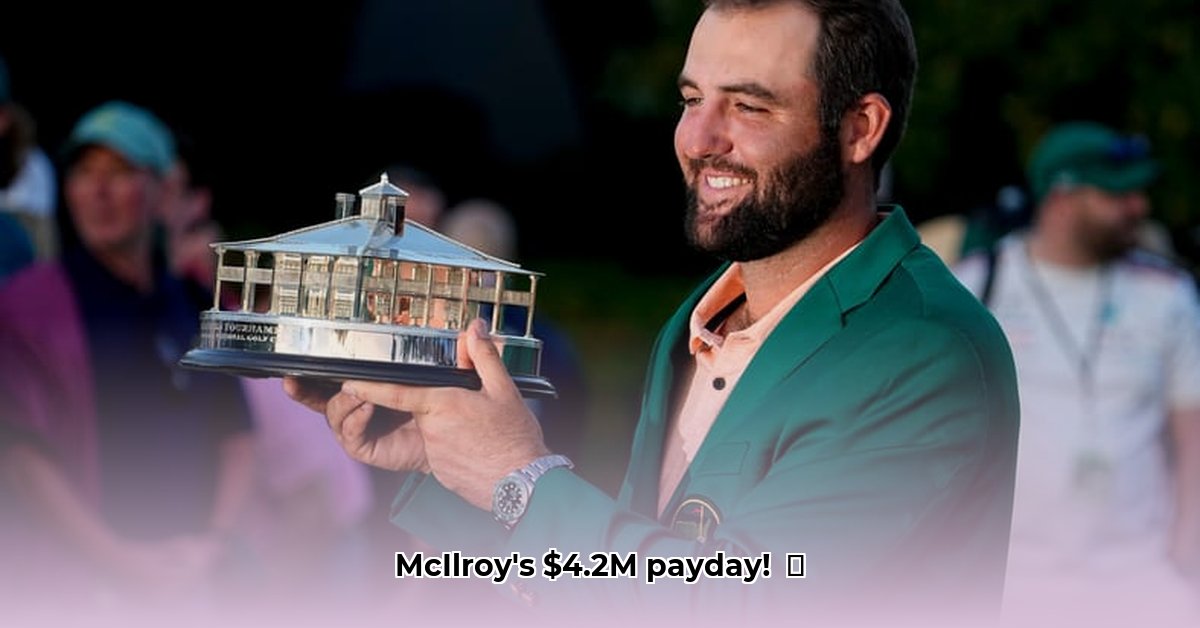
Masters Tournament 2025: A Record-Breaking Payout
Rory McIlroy's dominant victory at the 2025 Masters Tournament wasn't just a display of golfing prowess; it was a financial milestone. His $4.2 million prize – a record for the prestigious event – underscores the escalating financial stakes in professional golf, a trend impacting everything from player decisions to the overall landscape of the sport. This unprecedented payout reflects the growing influence of LIV Golf, increased sponsorship deals, and the ever-increasing value of television rights. For more details on Masters prize money, check out this Masters purse info.
The sheer magnitude of McIlroy's winnings raises important questions. How will this dramatic increase in prize money affect smaller tournaments? Will this trend be sustainable in the long-term? The answers are crucial to the future of professional golf.
McIlroy's Win and the Reshaping of Professional Golf
McIlroy's $4.2 million prize is more than just a personal triumph; it represents a significant shift in the financial landscape of professional golf. His victory, capping off a career Grand Slam, has amplified conversations around the growing influence of substantial financial incentives on players' choices and tournament strategies.
"It's a game-changer," says Annika Sörenstam, a legendary golfer and World Golf Hall of Fame member. "The increase in prize money is undeniable, and it's altering how players approach their careers and tournament schedules. The pressure to perform is amplified, but so are the rewards."
The impact extends beyond individual players. The record payout at the Masters is a clear indication of the financial power now driving professional golf. This massive prize purse reflects the intense competition for top talent and the increasingly lucrative nature of the sport.
Prize Money Breakdown: A Look at the Distribution
The significant increase in the Masters 2025 prize money wasn't limited to the winner. The entire payout structure saw a major boost, benefiting players throughout the leaderboard. Even a 20th-place finish yielded a substantial $100,000, highlighting the considerable financial rewards now available at even the highest levels of competition. Below is a summary of the approximate prize money distribution:
- 1st Place: $4,200,000
- 2nd Place: $2,500,000
- 3rd Place: $1,500,000
- 10th Place: $300,000
- 20th Place: $100,000
(Please note: These figures are estimates based on available reports and may differ slightly from the official figures.)
This distribution significantly alters the financial landscape for participating golfers, providing substantial funds even for those who didn't reach the top of the leaderboard, influencing their career choices and financial stability.
The LIV Golf Factor: A Financial Arms Race
The dramatic increase in Masters prize money is intrinsically linked to the emergence of LIV Golf. The Saudi-backed league's exceptionally lucrative offers have created a competitive financial environment, pushing traditional tournaments, including the Masters, to increase their payouts to retain and attract top golfing talent. This effectively has created a "financial arms race," reshaping the dynamics of player loyalty and tournament participation.
"The LIV Golf effect is undeniable," states David Feherty, a prominent golf commentator and analyst. "It's forced a reevaluation of compensation across the sport. The Masters' response reflects this new reality."
The Future of Golf Finances: Sustainability and Long-Term Impact
The question of sustainability looms large. Can this escalating prize money trend continue indefinitely? The long-term impact on the sport’s financial ecosystem is still uncertain. While the short-term effects are evident in the increased competitiveness and higher player earnings, the long-term consequences require careful consideration.
Will smaller tournaments survive? Will the increased financial pressure on the sport lead to unforeseen consequences? These are crucial questions that will shape the future of professional golf.
Key Takeaways
- Rory McIlroy's record-breaking $4.2 million win at the 2025 Masters highlights the escalating prize money in professional golf.
- The increased payouts are largely attributed to the competition spurred by LIV Golf and the need to attract top talent.
- The impact on smaller tournaments and the overall sustainability of this financial model remains a significant concern for the future of golf.
The 2025 Masters Tournament represents a pivotal moment in the history of professional golf, signaling a new era defined by unprecedented financial stakes and the ongoing evolution of the sport's economic landscape.